Tag: politics

  • A Tragedy at the Christmas Market: A Call for Unity and Justice

    Yesterday, a horrific attack at a Christmas market in Germany left several injured and a nation in mourning. The incident, perpetrated by an ex-Muslim Saudi immigrant, has not only shaken public safety but also reignited divisive debates about immigration, radicalization, and community blame. Amid the pain, it is crucial to focus on justice for the victims, address the roots of violence, and reject the broader stigmatization of entire communities.

    The attacker acted alone, wielding a knife against unsuspecting visitors at the heart of the festive market. Emergency responders swiftly apprehended him and provided critical aid to those injured. Early investigations reveal that the perpetrator was influenced by radical anti-Islamist ideologies and openly supported the Israeli Defense Forces and their actions in Gaza. His social media posts on X (formerly Twitter) displayed an unsettling alignment with extremist ideologies, raising questions about his affiliations and the potential involvement of Zionist organizations.

    This case challenges stereotypes about extremism, demonstrating that it is not confined to any one faith or ethnicity. Radicalization, regardless of its origins, feeds on division, fear, and hatred. This tragedy should prompt a deeper examination of how such toxic ideologies take root and what measures can prevent them.

    Sadly, the aftermath of this attack has seen a surge in hate speech and generalizations targeting Muslim communities. Social media platforms, including X under Elon Musk’s leadership, have become breeding grounds for anti-immigrant rhetoric, with calls for mass deportations of Muslims gaining traction. This collective blame mirrors past incidents, such as when far-right groups attacked mosques in response to crimes by individuals of different faiths.

    Such reactions ignore the individual nature of criminal acts and perpetuate cycles of alienation and hostility. Blaming entire communities for the actions of a few is not only unjust but also fuels the very divisions that extremists exploit. The focus must remain on holding perpetrators accountable while fostering unity and mutual understanding.
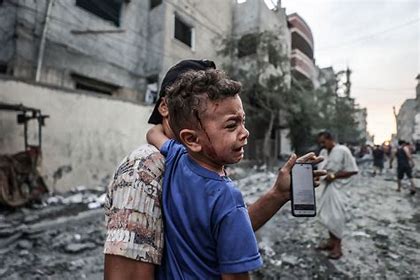
    The tragedy also underscores a glaring double standard in global discourse. While Western nations have historically bombed and destabilized Islamic countries, leading to millions of deaths and displacements, there is often little acknowledgment of this suffering. These same nations continue to arm entities that perpetuate violence in regions like Gaza. The selective empathy extended to victims based on geography or faith dehumanizes countless lives and perpetuates systemic injustice.

    It is time to reject these biases and address the root causes of violence—whether they stem from ideological extremism or geopolitical agendas. Western societies must take a hard look at their own roles in global conflicts and work towards policies that prioritize peace, equity, and mutual respect.

    The Christmas market attack is a heartbreaking reminder of the work that remains to be done. Justice for the victims demands not just accountability for the perpetrator but also a commitment to rejecting hate in all its forms. We must stand together against the vilification of communities, challenge narratives of division, and reaffirm the universal value of human life.

    This tragedy is a call to action—a call to defend humanity over hatred and unity over division. Only by embracing these principles can we hope to prevent such events in the future and build a world where all people can live with dignity and peace.


  • Richard Grenell’s once again Tweet About Imran Khan and Geo News: What It Means for Pakistan

    Richard Grenell, a prominent U.S. politician and former ambassador, recently engaged in a public exchange with Geo News, a major Pakistani media outlet, over the treatment of Pakistan’s former Prime Minister, Imran Khan. Grenell’s outspoken support for Khan and criticism of Geo News have sparked significant discussions both within Pakistan and internationally.

    What Happened?

    The incident began when Richard Grenell tweeted in support of Imran Khan, calling for his release and criticizing the Pakistani government’s actions against him. In his tweet, Grenell used the hashtag “#FreeImranKhan” and shared a screenshot of a Geo News tweet that allegedly contained misleading information about him. Following Grenell’s public criticism, Geo News deleted their controversial tweet.

    Journalism Pakistan

    Why Does Grenell Support Imran Khan?

    Several factors may explain Grenell’s support for Imran Khan:

    1. Advocacy for Democratic Principles: Grenell may perceive Khan’s situation as a matter of democratic governance and human rights, prompting his call for fair treatment.
    2. Critique of Media Practices: By highlighting Geo News’s actions, Grenell appears to challenge what he views as biased media practices, advocating for integrity in journalism.

    Impact on Pakistan’s Political Landscape

    Grenell’s intervention has had notable effects on Pakistan’s politics:

    1. International Attention: His statements have brought global focus to Imran Khan’s situation, potentially influencing international perceptions of Pakistan’s political climate.
    2. Media Scrutiny: The incident has led to increased examination of Geo News’s reporting practices, sparking debates about media ethics in Pakistan.
    3. Public Discourse: Within Pakistan, Grenell’s comments have intensified discussions about political freedoms and the role of international voices in domestic affairs.

    Conclusion

    Richard Grenell’s engagement in Pakistan’s political discourse underscores the interconnectedness of global politics and media. His support for Imran Khan and criticism of Geo News have not only highlighted specific issues within Pakistan but have also prompted broader conversations about media ethics, political freedoms, and international involvement in domestic matters.

    The Versatile Voice

    https://x.com/settings/profile

  • Historic Day in Syria: Assad Regime Falls as Rebels Seize Damascus

    December 8, 2024

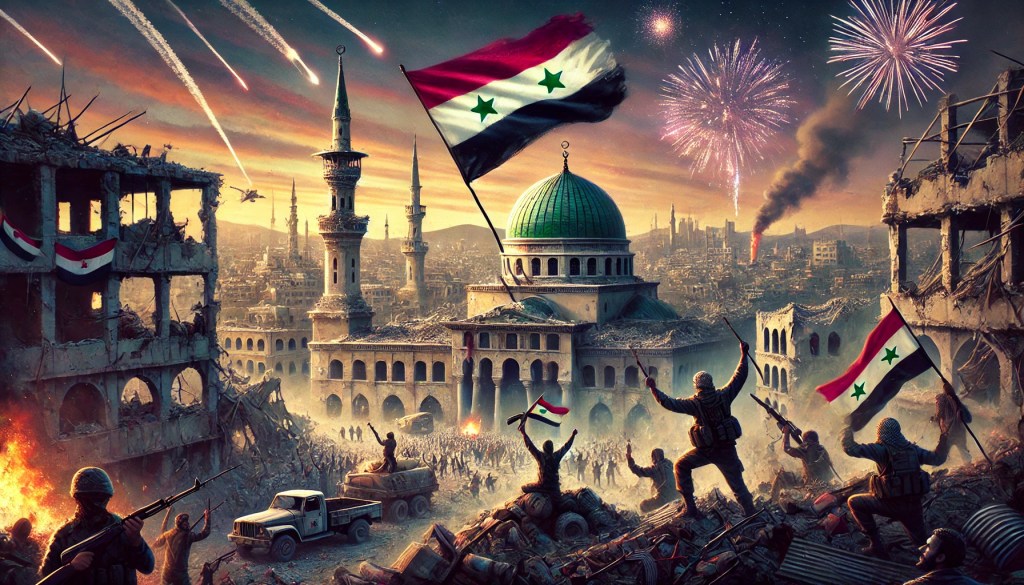
    In a dramatic turn of events, the Syrian capital, Damascus, fell into the hands of rebel forces today, marking the end of President Bashar al-Assad’s 23-year rule. The culmination of years of conflict, this development signals a pivotal moment in Syria’s modern history and opens a new, uncertain chapter for the nation.


    The Fall of Damascus

    Rebel fighters stormed the capital after capturing key positions in the city over the past 48 hours. Reports indicate that government forces loyal to Assad offered minimal resistance as opposition forces advanced from their stronghold in Homs, which fell to rebels earlier this week. Celebratory gunfire and chants of “Freedom!” filled the streets as thousands of Syrians took to public squares to celebrate the end of Assad’s regime.

    “This is a day of liberation,” said one resident of Damascus, waving the Syrian revolutionary flag. “We have waited for this moment for over a decade.”


    Assad’s Whereabouts Unknown

    As the regime crumbled, President Bashar al-Assad’s location remained a mystery. Speculation suggests that Assad fled the capital prior to the rebel advance. Some unconfirmed reports indicate that he may have sought refuge in Moscow or Tehran, both longtime allies of the regime. Syrian state media, which had served as a mouthpiece for the government, went offline early this morning, further fueling uncertainty about Assad’s fate.


    How Did It Come to This?

    The Assad regime’s collapse followed months of significant territorial gains by rebel factions. The recent capture of Homs, a strategic city linking Damascus to Syria’s central and northern regions, dealt a critical blow to the government’s ability to maintain control over the capital.

    Years of economic collapse, widespread corruption, and relentless airstrikes on civilian areas further eroded the regime’s legitimacy, even among its traditional bases of support. Analysts suggest that the decisive factor was the increasing coordination among rebel factions, coupled with reduced support for Assad from key international backers.


    Regional and Global Reactions

    The fall of the Assad regime has sent shockwaves across the region. Neighboring countries, including Lebanon, Jordan, and Turkey, have heightened border security amid fears of a mass exodus of refugees. The United Nations called for calm and emphasized the need for humanitarian corridors to assist civilians trapped in the conflict.

    Russia, a staunch ally of Assad, responded with airstrikes targeting rebel positions in eastern Syria, signaling that the conflict is far from over. Meanwhile, Western nations, including the United States and European Union member states, have urged restraint and called for a peaceful transition to a democratic government.

    Israel has also moved forces into the Golan Heights buffer zone, citing security concerns amid the volatile situation.


    The Road Ahead

    The fall of Damascus and the Assad regime leaves Syria at a crossroads. While many Syrians celebrate the end of decades-long authoritarian rule, the nation faces daunting challenges, including rebuilding war-torn cities, addressing deep-seated sectarian divisions, and ensuring a peaceful transition to a new government.

    Opposition leaders have vowed to establish an inclusive transitional council to lead the country toward democracy. However, questions remain about the unity of rebel factions, some of which have conflicting ideologies and goals. The international community is expected to play a crucial role in mediating between Syrian factions to prevent further chaos.


    Humanitarian Crisis

    The humanitarian toll of the Syrian conflict is staggering. Over 500,000 people have lost their lives, and millions have been displaced internally and across borders. With the collapse of the regime, aid agencies are warning of an urgent need for humanitarian assistance to prevent further suffering.


    A Turning Point in History

    Today marks a historic turning point for Syria. The fall of the Assad regime, once considered unshakeable, is a testament to the resilience and determination of the Syrian people. However, the road to recovery and stability remains long and fraught with challenges.

    As celebrations fill the streets of Damascus, the world watches closely, hoping that this moment of triumph will pave the way for peace, justice, and a brighter future for all Syrians.