Tag: news

  • A Tragedy at the Christmas Market: A Call for Unity and Justice

    Yesterday, a horrific attack at a Christmas market in Germany left several injured and a nation in mourning. The incident, perpetrated by an ex-Muslim Saudi immigrant, has not only shaken public safety but also reignited divisive debates about immigration, radicalization, and community blame. Amid the pain, it is crucial to focus on justice for the victims, address the roots of violence, and reject the broader stigmatization of entire communities.
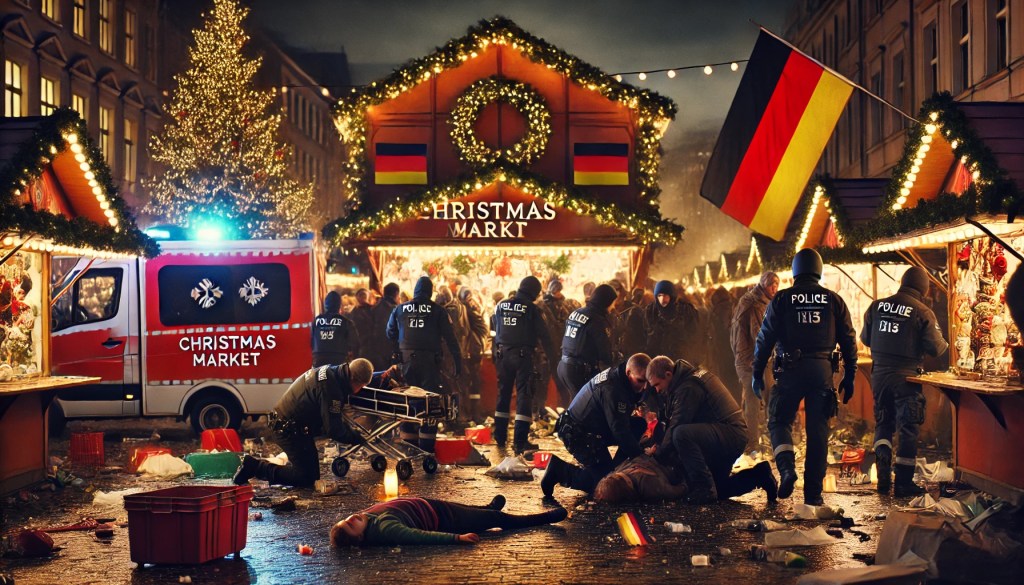
    The attacker acted alone, wielding a knife against unsuspecting visitors at the heart of the festive market. Emergency responders swiftly apprehended him and provided critical aid to those injured. Early investigations reveal that the perpetrator was influenced by radical anti-Islamist ideologies and openly supported the Israeli Defense Forces and their actions in Gaza. His social media posts on X (formerly Twitter) displayed an unsettling alignment with extremist ideologies, raising questions about his affiliations and the potential involvement of Zionist organizations.

    This case challenges stereotypes about extremism, demonstrating that it is not confined to any one faith or ethnicity. Radicalization, regardless of its origins, feeds on division, fear, and hatred. This tragedy should prompt a deeper examination of how such toxic ideologies take root and what measures can prevent them.

    Sadly, the aftermath of this attack has seen a surge in hate speech and generalizations targeting Muslim communities. Social media platforms, including X under Elon Musk’s leadership, have become breeding grounds for anti-immigrant rhetoric, with calls for mass deportations of Muslims gaining traction. This collective blame mirrors past incidents, such as when far-right groups attacked mosques in response to crimes by individuals of different faiths.

    Such reactions ignore the individual nature of criminal acts and perpetuate cycles of alienation and hostility. Blaming entire communities for the actions of a few is not only unjust but also fuels the very divisions that extremists exploit. The focus must remain on holding perpetrators accountable while fostering unity and mutual understanding.
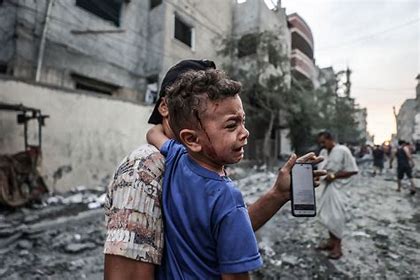
    The tragedy also underscores a glaring double standard in global discourse. While Western nations have historically bombed and destabilized Islamic countries, leading to millions of deaths and displacements, there is often little acknowledgment of this suffering. These same nations continue to arm entities that perpetuate violence in regions like Gaza. The selective empathy extended to victims based on geography or faith dehumanizes countless lives and perpetuates systemic injustice.

    It is time to reject these biases and address the root causes of violence—whether they stem from ideological extremism or geopolitical agendas. Western societies must take a hard look at their own roles in global conflicts and work towards policies that prioritize peace, equity, and mutual respect.

    The Christmas market attack is a heartbreaking reminder of the work that remains to be done. Justice for the victims demands not just accountability for the perpetrator but also a commitment to rejecting hate in all its forms. We must stand together against the vilification of communities, challenge narratives of division, and reaffirm the universal value of human life.

    This tragedy is a call to action—a call to defend humanity over hatred and unity over division. Only by embracing these principles can we hope to prevent such events in the future and build a world where all people can live with dignity and peace.

  • Richard Grenell’s once again Tweet About Imran Khan and Geo News: What It Means for Pakistan

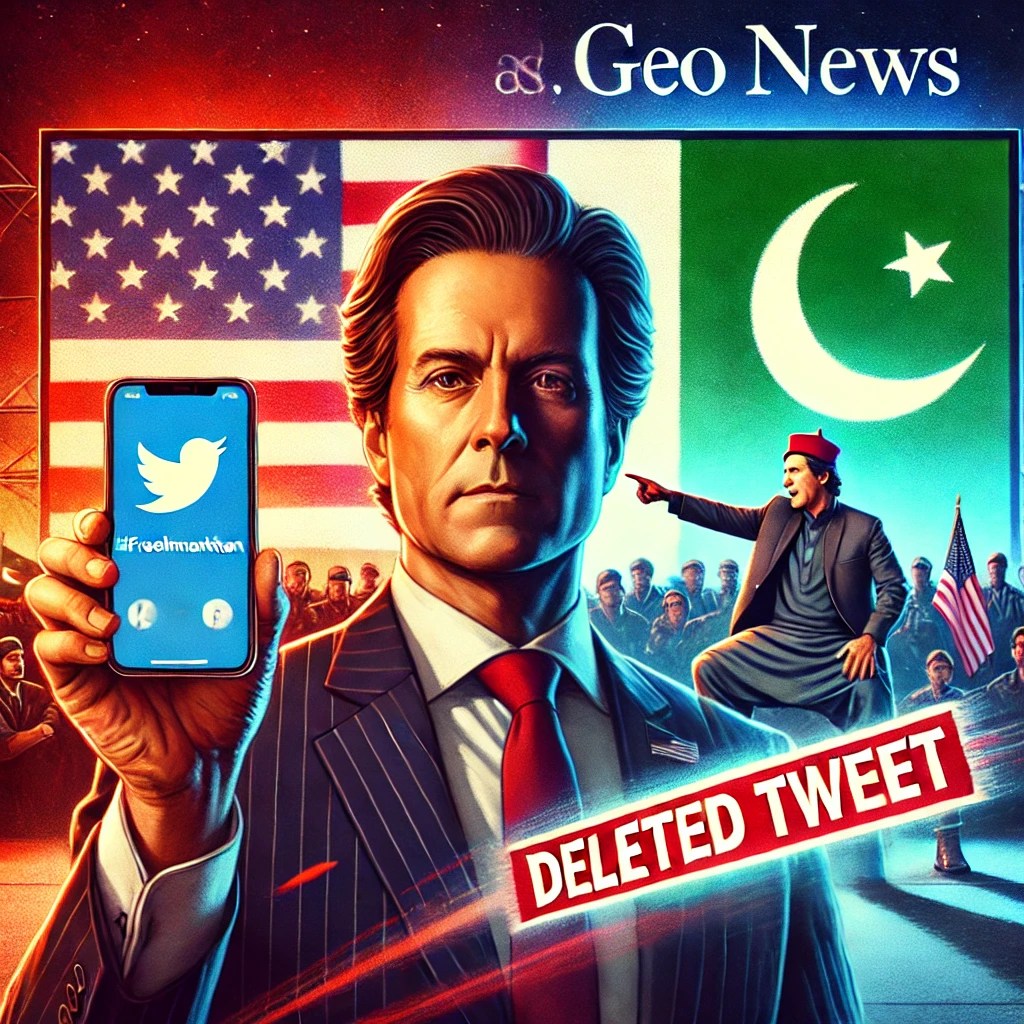
    Richard Grenell, a prominent U.S. politician and former ambassador, recently engaged in a public exchange with Geo News, a major Pakistani media outlet, over the treatment of Pakistan’s former Prime Minister, Imran Khan. Grenell’s outspoken support for Khan and criticism of Geo News have sparked significant discussions both within Pakistan and internationally.

    What Happened?

    The incident began when Richard Grenell tweeted in support of Imran Khan, calling for his release and criticizing the Pakistani government’s actions against him. In his tweet, Grenell used the hashtag “#FreeImranKhan” and shared a screenshot of a Geo News tweet that allegedly contained misleading information about him. Following Grenell’s public criticism, Geo News deleted their controversial tweet.

    Journalism Pakistan

    Why Does Grenell Support Imran Khan?

    Several factors may explain Grenell’s support for Imran Khan:

    1. Advocacy for Democratic Principles: Grenell may perceive Khan’s situation as a matter of democratic governance and human rights, prompting his call for fair treatment.
    2. Critique of Media Practices: By highlighting Geo News’s actions, Grenell appears to challenge what he views as biased media practices, advocating for integrity in journalism.

    Impact on Pakistan’s Political Landscape

    Grenell’s intervention has had notable effects on Pakistan’s politics:

    1. International Attention: His statements have brought global focus to Imran Khan’s situation, potentially influencing international perceptions of Pakistan’s political climate.
    2. Media Scrutiny: The incident has led to increased examination of Geo News’s reporting practices, sparking debates about media ethics in Pakistan.
    3. Public Discourse: Within Pakistan, Grenell’s comments have intensified discussions about political freedoms and the role of international voices in domestic affairs.

    Conclusion

    Richard Grenell’s engagement in Pakistan’s political discourse underscores the interconnectedness of global politics and media. His support for Imran Khan and criticism of Geo News have not only highlighted specific issues within Pakistan but have also prompted broader conversations about media ethics, political freedoms, and international involvement in domestic matters.

    The Versatile Voice

    https://x.com/settings/profile

  • UFC 311: The Clash of Champions and What’s Next

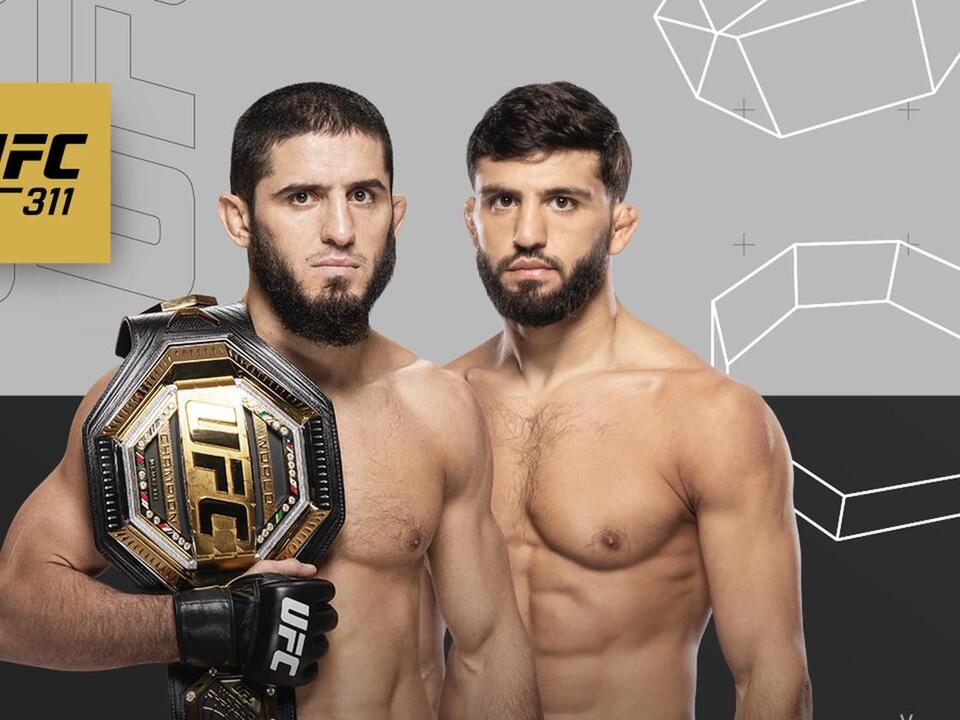
    Get ready, fight fans! UFC 311 is just around the corner, and the buzz surrounding this event is off the charts. With a stacked fight card and headliners who promise fireworks, this night has all the ingredients to be one of the most unforgettable events in UFC history.

    The main event features two absolute beasts going toe-to-toe. Islam Makhachev, the reigning lightweight champion and MMA master of control, will face off against Arman Tsarukyan, a dynamic fighter with a well-rounded game and an unbreakable will. The clash of styles and history between these two makes this fight so intriguing.

    • Islam Makhachev (Lightweight Division): Makhachev is known for his exceptional grappling and unmatched ability to dominate his opponents on the ground. A protégé of Khabib Nurmagomedov, he has an impressive fight IQ and striking that has evolved significantly in recent bouts. His record speaks volumes, and he’s entering this fight as the favorite.
    • Arman Tsarukyan (Lightweight Division): Tsarukyan is no stranger to Makhachev, having faced him before in a close bout. Since then, he’s improved leaps and bounds, showing remarkable striking, cardio, and grappling. His ability to adapt and push the pace makes him a serious threat to the champion.

    The co-main event pits Merab Dvalishvili, the relentless cardio machine, against Umar Nurmagomedov, the undefeated rising star with elite grappling and striking.

    • Merab Dvalishvili (Bantamweight Division): Known for his insane pace and takedown volume, Merab is a nightmare matchup for any opponent. His tenacity and ability to grind out wins make him a tough contender.
    • Umar Nurmagomedov (Bantamweight Division): Umar, a cousin of Khabib, is carrying the Nurmagomedov legacy with his flawless record. His precise striking and slick submissions make him one of the most exciting fighters to watch in this division.

    What’s heating up the excitement even more is the intense back-and-forth between Merab and Umar at the pre-fight press conference. Both fighters didn’t hold back, exchanging verbal jabs that had the crowd buzzing. Merab dismissed Umar’s undefeated record as “padded” and claimed, “You’ve fought nobodies; I’m the real challenge.” Umar retaliated with sharp words, calling Merab’s fighting style “sloppy” and promising to “hemble him in the Octagon.”

    The trash talk didn’t end there. On social media, Merab posted a video of his grueling training session with the caption: “Preparing for the hype machine. See you on the mat, Umar.” Umar hit back with an Instagram story showcasing his sparring highlights, writing: “Keep running, Merab. You’ll need all the cardio you can get.”

    What makes UFC so exciting is the unpredictability. Islam Makhachev might have the control and experience, but Arman Tsarukyan has the hunger and striking versatility to pull off an upset. Similarly, the co-main event between Merab and Umar promises to be a chess match of endurance and technique—and possibly the most heated showdown of the night.

    UFC 311 isn’t just another fight night; it’s a moment in history. With the stakes so high, fans are in for a rollercoaster of emotions. Whether you’re Team Makhachev or Team Tsarukyan, Team Merab or Team Umar, one thing’s for sure: these fights are going to deliver.

    So, grab your snacks, invite your friends, and tune in. This isn’t just a fight—it’s a war, and the world will be watching. Let’s see who leaves the Octagon as the ultimate warriors.

  • FIFA 2034 World Cup: Saudi Arabia Takes Center Stage

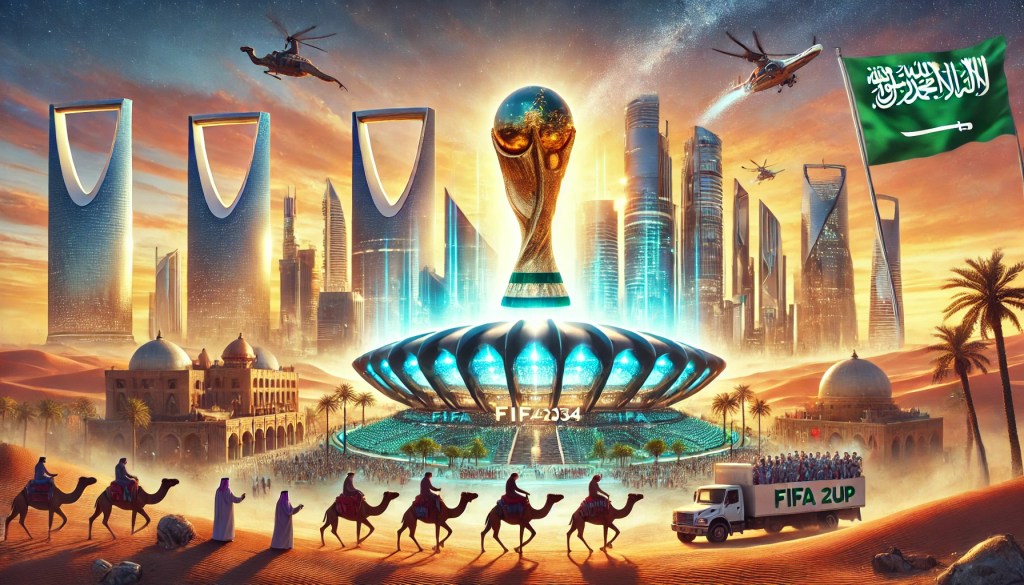
    The football world is abuzz with FIFA’s groundbreaking announcement—Saudi Arabia will host the 2034 FIFA World Cup. This decision is more than just a sports headline; it’s a seismic shift that cements the Middle East’s position as a global sports powerhouse. Following Qatar’s 2022 spectacle, Saudi Arabia’s turn in the spotlight has ignited heated debates, with critics and supporters sparring over what this means for football, culture, and politics.

    Middle East Rising: A New Power Player

    Saudi Arabia’s selection signals the region’s growing influence in shaping global sports narratives. Hot on the heels of Qatar’s historic 2022 World Cup, Saudi Arabia is poised to elevate the Middle Eastern sports legacy even further. This move aligns seamlessly with Saudi Arabia’s Vision 2030—a bold blueprint for diversifying the economy, boosting tourism, and solidifying its place on the world stage.

    But this isn’t just about football. It’s about telling a story: a narrative of transformation, ambition, and cultural evolution. With sprawling megaprojects like Neom and futuristic stadiums in the pipeline, Saudi Arabia is preparing to dazzle the world in 2034.

    Qatar 2022 vs. Saudi 2034: A Tale of Two Hosts

    Qatar’s 2022 World Cup raised the bar for host nations. From compact venues to unparalleled fan experiences, it showcased innovation and hospitality. Yet, it also faced harsh criticism—human rights concerns, labor issues, and its scorching climate dominated headlines.

    Saudi Arabia’s challenge? To outshine Qatar while navigating similar controversies. With a larger geographical footprint and deeper pockets, Saudi Arabia has the capacity to host a sprawling, multifaceted tournament. However, critics are already questioning labor practices, women’s rights, and environmental commitments. Will the Kingdom’s promises of sustainability and inclusivity silence the skeptics?

    The West vs. Middle East: A Persistent Critique

    Whenever the Middle East takes center stage, Western critics are quick to scrutinize. Accusations of “sportswashing”—using major events to distract from domestic issues—echoed loudly during Qatar’s preparations. Saudi Arabia is bracing for a similar narrative.

    Yet, a counterargument is gaining traction. Are these criticisms selectively applied? Russia and China, for instance, hosted major global events with less persistent backlash. Is the West’s lens on the Middle East tinted by geopolitical biases rather than genuine concern? The 2034 World Cup may become a litmus test for these dynamics.

    Saudi Arabia’s Vision for a Spectacular 2034

    Saudi Arabia is going all-in to make 2034 unforgettable. From hyper-modern stadiums to high-speed transport networks, the Kingdom is leaving no stone unturned. Key cities like Riyadh, Jeddah, and futuristic Neom will take center stage, blending tradition with cutting-edge innovation.

    Cultural exchange will also be a highlight. The World Cup presents an opportunity to showcase Saudi Arabia’s evolving identity. Recent reforms, such as lifting the ban on women driving and increasing entertainment options, hint at a country in transition. But these changes will need to go beyond optics to truly resonate with global audiences.

    Lessons from Qatar: A Blueprint for Success

    Saudi Arabia can draw valuable lessons from Qatar’s experience. While Qatar delivered a memorable tournament, it faced heavy scrutiny over labor rights and environmental concerns. Saudi Arabia must prioritize worker welfare and sustainability to avoid similar pitfalls.

    Transparency will be crucial. By openly addressing concerns and collaborating with international organizations, Saudi Arabia can build trust and credibility. After all, football is more than a game; it’s a unifying force that transcends borders and cultures.

    Bridging Divides: The Bigger Picture

    The 2034 FIFA World Cup isn’t just about football. It’s about reshaping perceptions. For Saudi Arabia, this is a chance to bridge cultural divides and position itself as a modern, inclusive, and dynamic nation. Success on this front could inspire future debates about the power of sports to foster understanding and unity.

    The Road Ahead

    Saudi Arabia’s World Cup journey is a bold statement to the world: the Middle East is here to stay as a major player in global sports. But with great ambition comes great responsibility. The Kingdom must navigate criticism, deliver on its promises, and set a new standard for hosting the beautiful game.

    As the countdown to 2034 begins, one thing is certain: the world will be watching. And if Saudi Arabia succeeds, it could redefine what it means to host a World Cup in the 21st century.