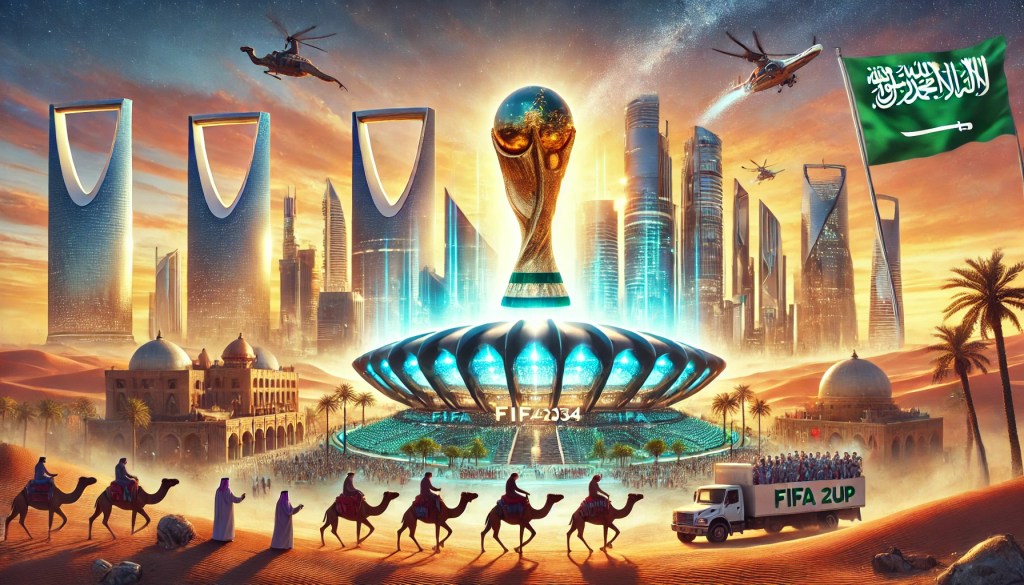
The football world is abuzz with FIFA’s groundbreaking announcement—Saudi Arabia will host the 2034 FIFA World Cup. This decision is more than just a sports headline; it’s a seismic shift that cements the Middle East’s position as a global sports powerhouse. Following Qatar’s 2022 spectacle, Saudi Arabia’s turn in the spotlight has ignited heated debates, with critics and supporters sparring over what this means for football, culture, and politics.
Middle East Rising: A New Power Player
Saudi Arabia’s selection signals the region’s growing influence in shaping global sports narratives. Hot on the heels of Qatar’s historic 2022 World Cup, Saudi Arabia is poised to elevate the Middle Eastern sports legacy even further. This move aligns seamlessly with Saudi Arabia’s Vision 2030—a bold blueprint for diversifying the economy, boosting tourism, and solidifying its place on the world stage.
But this isn’t just about football. It’s about telling a story: a narrative of transformation, ambition, and cultural evolution. With sprawling megaprojects like Neom and futuristic stadiums in the pipeline, Saudi Arabia is preparing to dazzle the world in 2034.
Qatar 2022 vs. Saudi 2034: A Tale of Two Hosts
Qatar’s 2022 World Cup raised the bar for host nations. From compact venues to unparalleled fan experiences, it showcased innovation and hospitality. Yet, it also faced harsh criticism—human rights concerns, labor issues, and its scorching climate dominated headlines.
Saudi Arabia’s challenge? To outshine Qatar while navigating similar controversies. With a larger geographical footprint and deeper pockets, Saudi Arabia has the capacity to host a sprawling, multifaceted tournament. However, critics are already questioning labor practices, women’s rights, and environmental commitments. Will the Kingdom’s promises of sustainability and inclusivity silence the skeptics?
The West vs. Middle East: A Persistent Critique
Whenever the Middle East takes center stage, Western critics are quick to scrutinize. Accusations of “sportswashing”—using major events to distract from domestic issues—echoed loudly during Qatar’s preparations. Saudi Arabia is bracing for a similar narrative.
Yet, a counterargument is gaining traction. Are these criticisms selectively applied? Russia and China, for instance, hosted major global events with less persistent backlash. Is the West’s lens on the Middle East tinted by geopolitical biases rather than genuine concern? The 2034 World Cup may become a litmus test for these dynamics.
Saudi Arabia’s Vision for a Spectacular 2034
Saudi Arabia is going all-in to make 2034 unforgettable. From hyper-modern stadiums to high-speed transport networks, the Kingdom is leaving no stone unturned. Key cities like Riyadh, Jeddah, and futuristic Neom will take center stage, blending tradition with cutting-edge innovation.
Cultural exchange will also be a highlight. The World Cup presents an opportunity to showcase Saudi Arabia’s evolving identity. Recent reforms, such as lifting the ban on women driving and increasing entertainment options, hint at a country in transition. But these changes will need to go beyond optics to truly resonate with global audiences.
Lessons from Qatar: A Blueprint for Success
Saudi Arabia can draw valuable lessons from Qatar’s experience. While Qatar delivered a memorable tournament, it faced heavy scrutiny over labor rights and environmental concerns. Saudi Arabia must prioritize worker welfare and sustainability to avoid similar pitfalls.
Transparency will be crucial. By openly addressing concerns and collaborating with international organizations, Saudi Arabia can build trust and credibility. After all, football is more than a game; it’s a unifying force that transcends borders and cultures.
Bridging Divides: The Bigger Picture
The 2034 FIFA World Cup isn’t just about football. It’s about reshaping perceptions. For Saudi Arabia, this is a chance to bridge cultural divides and position itself as a modern, inclusive, and dynamic nation. Success on this front could inspire future debates about the power of sports to foster understanding and unity.
The Road Ahead
Saudi Arabia’s World Cup journey is a bold statement to the world: the Middle East is here to stay as a major player in global sports. But with great ambition comes great responsibility. The Kingdom must navigate criticism, deliver on its promises, and set a new standard for hosting the beautiful game.
As the countdown to 2034 begins, one thing is certain: the world will be watching. And if Saudi Arabia succeeds, it could redefine what it means to host a World Cup in the 21st century.
 The Versatile Voice